Sometimes the weather doesn’t cooperate. Sometimes you just want a screen-free afternoon at home. Either way, indoor play keeps kids entertained while helping them learn and grow. None of the ideas below need fancy toys. Pots, cardboard boxes, old blankets, and a few crayons cover most of them. Here are activities grouped by age that you can set up with things you already own.
Why Indoor Play Matters
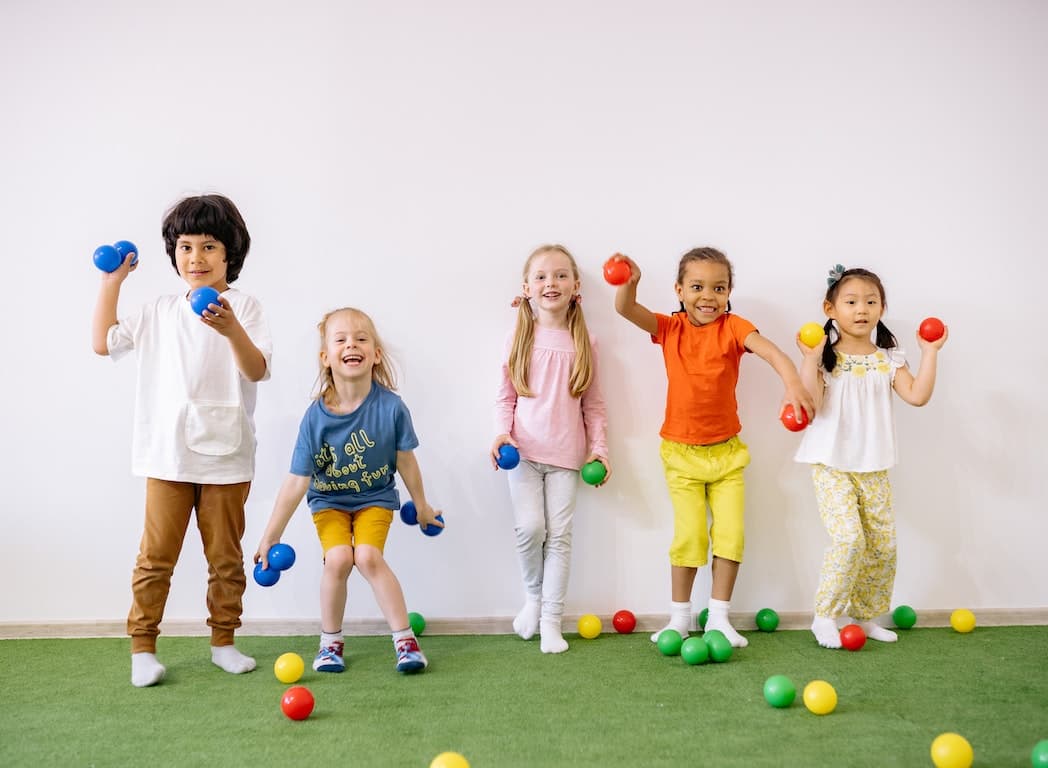
Play is how young children build their brains. In the first few years, a baby’s brain forms far more connections than it will ever use. The connections a child uses often get stronger; the ones they don’t get pruned away. Every time your child stacks a block, hides under a blanket, or bangs a spoon on a pot, they are practising a skill and wiring it in.
The American Academy of Pediatrics calls this the “power of play” and treats it as a real part of healthy development, not a break from learning. (We dig into this further in the science of play.) Unstructured play in the toddler and preschool years has been linked to better self-regulation later on, the focus and impulse control that make school learning stick. Play also lowers stress. Children who play a lot tend to have lower cortisol levels, especially when a caring adult plays along. UNICEF makes the same point: simple games at home support a child’s growth as much as any toy.
So indoor play isn’t filler. It builds:
- Fine and gross motor skills
- Problem-solving and early thinking
- Language and communication
- Creativity and imagination
- Emotional regulation
- Social skills like turn-taking and sharing
Here are activities grouped by age.
Babies 0-9 months:
Babies at this stage are developing their senses and motor skills quickly. These activities support that growth:
Peek-a-boo:
- Use your hands, a cloth, or a small blanket
- Gradually increase how long you hide
- Add sound effects or different facial expressions
- Builds object permanence, social interaction, and visual tracking
See and Say:
- Point out objects throughout the day
- Use simple, clear language
- Include descriptive words (big, small, soft, hard)
- Builds vocabulary, visual recognition, and bonding
Family Band:
- Make instruments from household items:
- Rice-filled containers for shakers
- Pots and pans for drums
- Wooden spoons for rhythm sticks
- Sing familiar songs and nursery rhymes
- Builds auditory processing, rhythm, and motor coordination (more on how music shapes the infant brain)
The Body Game:
- Gently touch and name each body part
- Use songs like “Head, Shoulders, Knees, and Toes”
- Include facial features and extremities
- Builds body awareness, language development, and bonding
 |  |  |
|---|
Toddlers 1-2 years:
Toddlers have energy to burn and curiosity to spare. These activities channel both:
Box Car:
- Use large cardboard boxes
- Add steering wheels, headlights, and decorations
- Make a “road” with tape on the floor
- Builds imaginative play, gross motor skills, spatial awareness
Kitchen Drummer:
- Give them safe kitchen items
- Create different rhythms and patterns
- Encourage copying and creating new sounds
- Builds rhythm, hand-eye coordination, auditory discrimination
Free Draw:
- Offer various art materials:
- Large crayons
- Washable markers
- Finger paints
- Set up a dedicated art space
- Builds fine motor skills, creativity, self-expression
Ball Pass:
- Start with large, soft balls
- Gradually use smaller balls
- Add counting or color recognition
- Builds hand-eye coordination, turn-taking, social skills
Storytime Theater:
- Choose age-appropriate books
- Use props and costumes
- Encourage participation
- Builds language development, imagination, listening skills
Build and Learn:
- Provide various building materials
- Create themed structures
- Encourage problem-solving
- Builds spatial reasoning, teamwork, creativity
Blanket Fort:
- Drape sheets over chairs and the sofa
- Toss in cushions and a torch
- Let your child crawl in, out, and rearrange it
- Builds gross motor skills, imaginative play, a cozy spot to read together
 |  |  |
|---|
Pre-school Children 3-4 years:
Preschoolers are ready for more complex activities that cultivate curiosity and stretch their thinking:
Dress Up:
- Create a costume box
- Include various fabrics and accessories
- Encourage role-playing
- Builds social skills, imagination, self-expression
“I am Going to Catch You!”:
- Set up safe play areas
- Include obstacles and hiding spots
- Add counting or color recognition
- Builds physical activity, spatial awareness, social interaction
Name That Noise:
- Use animal sounds, environmental noises
- Create sound matching games
- Add movement to sounds
- Builds auditory discrimination, vocabulary, memory
Toddler Challenge:
- Create obstacle courses
- Include balance activities
- Add counting and color recognition
- Builds gross motor skills, coordination, confidence
Indoor Treasure Hunt:
- Hide a few small objects around a room
- Give simple clues (“look near something soft”)
- Add color or counting challenges as they go
- Builds problem-solving, listening, and movement
Sort and Match:
- Gather buttons, socks, blocks, or plastic lids
- Ask your child to group them by color, size, or shape
- Talk about why things go together
- Builds early math thinking, focus, and vocabulary
Make Your Own Playdough:
Recipe:
- 2 cups flour
- 1 cup salt
- 2 cups water
- 2 tablespoons oil
- Food coloring
- Optional: glitter, scents
Instructions:
- Mix dry ingredients
- Add water and oil
- Cook over medium heat until dough forms
- Add color and extras
- Knead until smooth
Builds sensory development, fine motor skills, creativity. For more hands-on ideas, see our guide to sensory activities for infants.
What About Older Kids?
Children five and up enjoy many of these too, just dialed up. Turn the treasure hunt into a clue-by-clue scavenger hunt across the house. Build a fort and run a puppet show from inside it. Card games like Go Fish, charades, and balloon volleyball with a fly swatter all work well and need almost nothing. This is also a good age for simple STEM experiments at home using everyday items.
Setting Up for Indoor Play
To get the most out of indoor play:
- Set up a safe play area
- Rotate toys and activities every week or two so they feel new again
- Mix structured activities with free, unstructured play
- Keep a consistent routine
- Stay nearby and join in when you can
Final Thoughts
Indoor play gives kids real chances to learn. These activities don’t just keep them busy. They help children grow in how they move, think, talk, and feel. And you don’t need a cupboard full of toys to do it. What matters most is your attention and the time you spend together.