The holiday season brings a mix of magic and mayhem for families. Between disrupted routines, travel stress, and the pressure to create picture-perfect memories, parents often find themselves overwhelmed. As a parenting counsellor, I’ve compiled evidence-based strategies from leading child development experts to help you get through this festive period with confidence and calm.

Understanding the impact of routine disruption on children
Children thrive on predictability. The sudden shift from structured school days to open-ended holiday time can trigger anxiety and behavioral challenges, particularly in younger children who rely on daily routines as their emotional scaffolding.
Creating holiday structures for younger children (ages 3-6)
Preschool and early elementary children need gentle structure during breaks. Child psychologist Pam Tudin-Buchalter recommends establishing a flexible daily rhythm that maintains consistency without rigidity.
Implement a visual schedule that children can reference independently. This might include simple picture cards showing the day’s flow: morning meal, active play, quiet time, outing, creative activity, dinner, and bedtime routine. The visual component helps pre-readers understand what comes next, reducing anxiety about the unknown.
Offer bounded choices throughout the day. Rather than asking “What do you want to do?” which can overwhelm young children, present two appealing options: “Should we visit the playground or ride bikes this morning?” This approach gives children agency while maintaining parental guidance.
Structuring freedom for school-age children (ages 7-10)
Older children can handle more autonomy but still benefit from loose frameworks. Consider creating themed days that provide direction without micromanagement: “Make-It Monday” for craft projects, “Adventure Wednesday” for outings, or “Friend Friday” for social time.
Schedule technology windows predictably rather than negotiating screen time constantly. When children know they have reliable access to devices at specific times, the nagging diminishes and they’re more likely to engage in other activities.
Assign meaningful responsibilities that contribute to family functioning. A daily “holiday helper” role, whether setting the table, organizing toys, or assisting with meal prep, builds competence and connection.
See related activities in Holiday Activities At Home For Kids.
Health precautions for holiday travel
Family travel during the holidays exposes children to new environments and increased illness risk. Dr. Alok Patel, a pediatrician at Stanford Children’s Hospital, emphasizes proactive health measures.
Pre-travel preparation
Verify that all family members have current vaccinations, particularly influenza immunizations. Remember that vaccines require approximately two weeks to reach full effectiveness, so plan accordingly before departure.
During travel
Practice rigorous hygiene protocols. Hand washing remains the single most effective prevention strategy. For children too young to wash thoroughly, keep sanitizing wipes accessible for cleaning hands before eating and after touching high-contact surfaces like airplane tray tables, seat buckles, and public door handles.
Establish illness protocols. If family members show symptoms of contagious illness, the most responsible choice is staying home, despite disappointment. When attendance at gatherings is necessary despite mild symptoms, masking protects vulnerable individuals, including elderly relatives and immunocompromised family members.
Recovery and resilience
Holiday excitement often leads to depleted immune systems. Prioritize adequate sleep, hydration, and nutritious foods. Model stress management for your children. They observe and internalize your coping strategies, which shapes their own resilience.
For travel planning tips and packing checklists, see Family Travel With Kids and prepare a simple kit from our Family Emergency Kit and First Aid Essentials.
Parental self-care: the foundation of family wellness
Professor Lucie Cluver, a child social work researcher at Oxford University, emphasizes that parental wellbeing directly impacts children’s holiday experience. Burned-out parents cannot provide the patience and presence children need during this demanding season.
Daily self-care practices
Establish non-negotiable personal time, even if brief. Five minutes of deep breathing, a favorite song, or a phone call with a supportive friend can reset your nervous system and improve emotional regulation.
Release perfectionism. The idealized holiday portrayed in media bears little resemblance to real family life. Instead of pursuing impossible standards, identify one positive interaction with your child each day. Acknowledge that small win before sleep.
Practice daily renewal. Parenting missteps happen, particularly under holiday stress. Tomorrow offers a fresh opportunity. Your consistent, good-enough parenting far exceeds occasional perfect moments.
Co-parenting during the holidays
For separated or divorced parents, holidays present logistical and emotional complexity. Psychologist Lisa Damour advises centering children’s emotional needs above parental preferences.
Planning and communication
Begin with child-centered decision making. Open communication between co-parents about holiday arrangements, combined with flexibility where possible, reduces children’s anxiety. Provide children with clear information about schedules and transitions.
Respect legal agreements and safety requirements, but recognize that identical traditions across households aren’t necessary. Children can enjoy different celebrations in each home without confusion or distress.
Allow unrestricted enjoyment. Children should feel free to fully engage with extended family on both sides without guilt or divided loyalties. Your child’s happiness in the other household doesn’t diminish your relationship.
Managing screen time without conflict
Extended holiday breaks often lead to increased media consumption. Dr. Jacqueline Nesi, a psychiatrist at Brown University, offers practical approaches that avoid punitive restrictions while maintaining healthy boundaries.
Establishing screen expectations
Create predictable media windows rather than constantly negotiating access. For example, screen time might occur after lunch daily for a defined period. Predictability eliminates repeated requests and power struggles.
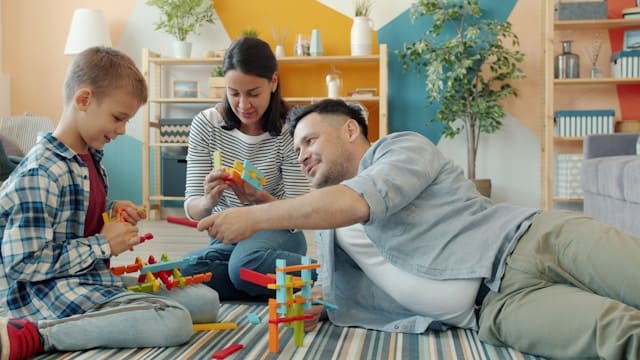
Actively set up screen-free activities. Don’t simply remove screens and expect children to self-direct. Engage them in alternatives: family hiking, board games, holiday baking projects, or construction toys that promote sustained attention.
Develop a boredom menu collaboratively. When children complain of boredom, they can consult the co-created list of engaging activities rather than defaulting to screens.
Prioritize content quality over quantity. Age-appropriate, values-aligned programming that emphasizes kindness, problem-solving, or creativity offers more developmental benefit than passive entertainment.
Some increase in screen time during breaks is developmentally normal and shouldn’t trigger parental guilt. The goal is balance, not elimination.
For practical challenges and a stepwise plan, see Digital Detox: A 7 Day Family Challenge and Creating Healthy Digital Habits at Home.
Protecting children’s digital privacy
Well-meaning relatives often photograph children extensively and share images on social media without parental consent. Legal expert Stacey Steinberg, who directs the University of Florida’s Center on Children and Families, recommends clear but gracious boundary-setting.
For deeper guidance on online privacy and consent, read Online Privacy: A Guide for Parents.
The boundary conversation
“I really appreciate how you capture these wonderful moments with the kids. I’d like to keep their photos within our family rather than on public platforms. Would you be willing to use a shared private album so we can all enjoy the pictures while respecting their privacy? I feel much more comfortable with that approach.”
This script acknowledges the relative’s positive intentions, states your boundary clearly, offers an alternative solution, and explains your reasoning. Most family members respond positively when approached respectfully.
Transitioning back to school routines
The return to school after extended breaks challenges children’s adjusted sleep schedules and relaxed routines. Dr. Hina Talib, a pediatrician specializing in adolescent medicine, recommends gradual reentry.
The three-to-five-day transition
Begin adjusting sleep schedules three to five days before school resumes. Shift bedtime forward by 15-20 minutes each night while correspondingly advancing wake times. This gradual change prevents the shock of sudden schedule shifts.
Reestablish meal timing and structure during the transition period. Regular meal schedules help regulate children’s internal clocks and improve overall functioning.
Incorporate structured activities during daytime hours to rebuild focus and attention capacity that may have relaxed during break.
The night before school
Complete practical preparations together: select clothing, pack backpacks, and review the upcoming day’s schedule. Your calm, matter-of-fact demeanor provides more reassurance than enthusiastic pep talks, which can inadvertently communicate that school requires special psychological preparation.
Expect adjustment time
Most children require one to two weeks to fully readjust to school routines. Temporary fatigue, irritability, or decreased motivation is normal biological adjustment rather than defiance or laziness. Maintain consistent expectations while offering extra patience during this period.
Conclusion: embracing imperfect holidays
Chasing perfect holidays creates unnecessary stress that diminishes everyone’s enjoyment. The most meaningful celebrations are imperfect. They’re messy, unscripted, and filled with genuine connection rather than staged moments.
Your effectiveness as a parent isn’t measured by flawless execution but by consistent presence, reasonable expectations, and the ability to repair relationships after inevitable missteps. These expert strategies provide frameworks for common holiday challenges, but adapt them to your family’s needs and values.
The holiday season gives children a chance to experience flexibility, develop resilience, and build memories. By maintaining realistic expectations, protecting your own wellbeing, and using evidence-based strategies, you create conditions for genuine holiday joy rather than performative perfection.
Related posts