The morning of a vaccine appointment can feel heavier than it should. Your child senses something is up. You are juggling the parking, the snack bag, the pediatrician’s intake forms, and a small person who has just asked, for the third time, whether the shot will hurt.
A vaccine visit is a small event with big emotional weight. Children read our faces, our pauses, and the words we choose. How we prepare them in the hours and days before the appointment shapes how the moment unfolds in the exam room, and how they remember shots the next time around.
This guide pulls together what pediatricians, child psychologists, and organizations like UNICEF, the American Academy of Pediatrics (AAP), and the CDC recommend for preparing young children for vaccinations. It is written for parents of toddlers and preschoolers, the age group where a single needle can produce the loudest reactions and the longest memory.
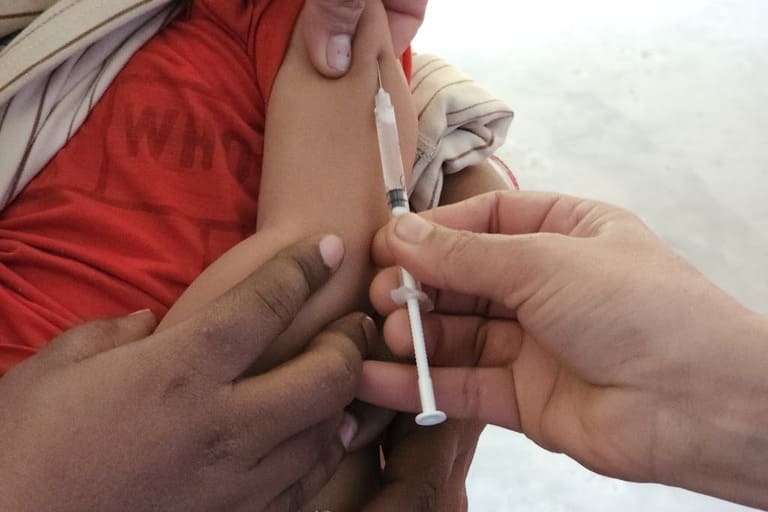
Why Preparation Matters
Vaccines are one of the most studied interventions in modern medicine. The CDC estimates that childhood immunizations prevent roughly 4 million deaths globally each year. In the United States, the recommended schedule protects children against 16 diseases before age 18.
The medical case is settled. The parenting challenge is different. Children who are surprised, rushed, or dismissed during a vaccine appointment can develop needle anxiety that follows them into adolescence and adulthood. Research published in Vaccine (Taddio et al.) found that about 1 in 4 adults reports a fear of needles, and most trace it back to a childhood experience.
The goal of preparation is not to talk a child out of feeling scared. It is to give them enough information, agency, and comfort that the moment passes quickly and the next visit feels less loaded.
The 7 Tips
1. Brush Up Yourself First
Children ask sharp questions. “What is in the shot?” “Does it have a worm in it?” “Will I die?” If you stumble, they notice.
Before you sit down to talk with your child, spend ten minutes refreshing your own knowledge. Read the vaccine information sheet your pediatrician will hand you. Skim the CDC page for the specific vaccine on the schedule. Know what disease it protects against and what side effects are common.
This is not about lecturing your child later. It is about answering with confidence when the questions come.
Quick parent refresh:
- Which vaccines are scheduled at this visit?
- What disease does each one prevent?
- What side effects, if any, should I expect in the next 24 to 48 hours?
- When was your child’s last dose, and were there any reactions?
Related reading: Teaching Healthy Eating Habits in Children
2. Open the Conversation Early
Do not wait until the parking lot. Bring it up a day or two before the appointment in a casual, low-pressure way. “On Thursday we are going to see Dr. Singh, and you are going to get a vaccine that helps your body fight germs.”
Then stop and listen. Ask how they are feeling about it. Some children will shrug. Others will burst into questions. A few will go quiet and bring it up at bedtime when their guard is down.
Children take their emotional cues from the adults around them. If you treat the visit as a routine, manageable event, most children will do the same. If you announce it with a sigh and a worried look, you have already told them this is something to dread.
A useful rule from pediatric psychologists: name your own feelings if you have them, but do not perform them. “I used to feel a little nervous about shots when I was your age. Now I know what to expect, and it goes by fast” is honest and grounding. “I hate that we have to do this” loads the moment with your own anxiety.
3. Use Words a Child Can Actually Hold
Toddlers and preschoolers are concrete thinkers. Abstract phrases like “boost your immune system” or “antibody response” do not stick. Short, visual explanations do.
Here are scripts you can adapt:
“What is a vaccine?” A vaccine is like a shield for your body. It helps you not get sick from certain germs.
“How does it work?” The vaccine has a tiny, tiny piece of a germ in it. It is so small it cannot make you sick. But your body sees it and learns how to fight it. So if that germ ever shows up for real, your body already knows what to do.
“Will it hurt?” It will feel like a quick pinch. Like when you bump your elbow on a table. It is over fast, faster than brushing your teeth.
“Why do I have to?” Because the germ this vaccine protects against can make people really sick. Your body is strong, and we are giving it one more tool to stay strong.
Avoid two common pitfalls: do not promise it will not hurt at all (it stings, and they will catch you in the lie), and do not threaten with the shot (“If you do not behave, the doctor will give you an extra shot”). Both erode trust in healthcare settings.

4. Let Them Feel Scared
Fear of a needle is a reasonable response from a small person who has just been told someone is going to poke them. Telling a scared child not to be scared rarely works. It usually makes them feel that their fear is wrong on top of being uncomfortable.
A better approach is to acknowledge the feeling, then walk them through what will happen.
A script that works for many parents:
I get it. A shot can feel scary because you do not know exactly what it will be like. Here is what is going to happen. Dr. Singh will look at your arm. She will clean a tiny spot with a cold wipe. Then there is a quick pinch, like this (gently pinch their arm). I will count to three, and by the time I get to three, it is done. Then you get a bandage, and we go get a treat.
Two pieces of this matter. First, you are giving them a sequence. Children find unpredictability frightening, so a step-by-step preview reduces the unknown. Second, you are practicing the pinch. Demonstrating the sensation on their arm at home is one of the simplest and most effective preparation techniques.
You can also rehearse with a stuffed animal. Have your child give the bear a “shot” with a pen cap. Let them play out the routine: cold wipe, pinch, bandage, treat. Play is how toddlers process new experiences.
5. Explain Why It Is Worth It
Even very young children can grasp the idea that vaccines protect other people too. This is sometimes the piece that lands for a child who is on the fence.
You might say:
When you get this vaccine, you are not just protecting yourself. You are also helping protect Grandma, and the baby next door, and your friend at preschool who is too little to get this shot yet. You are doing something brave for your whole family.
For some kids, this reframes the appointment from “something happening to me” to “something I am doing for the people I love.” That shift in agency can be powerful, especially for preschoolers who are starting to care about fairness and helping.
A note on framing: do not lean on bravery so heavily that a child who cries feels they have failed. Crying during a shot is normal, including for adults. The bravery is in showing up, not in staying silent.
See also: 10 Parenting Mistakes to Avoid!
6. Distract During the Shot
The few seconds before and during the injection are when most of the meltdown energy lives. A good distraction collapses that window.
Distractions that work well for toddlers and preschoolers:
| Age | What to Bring or Do |
|---|---|
| 1-2 years | Favorite small toy, a board book, a song you sing together, blowing on a pinwheel |
| 3-4 years | A tablet with a short video cued up, bubbles to blow, a sticker sheet to peel, telling them a silly story |
| 5-6 years | A “look at this” game (find five red things in the room), a hand-squeeze count, a phone with their favorite show |
Blowing matters specifically. Slow, sustained exhales (blowing bubbles, a pinwheel, or a feather) trigger a small parasympathetic response that lowers heart rate and dulls pain perception. Pediatric pain studies have found that distraction techniques can reduce procedural pain in children by a meaningful margin.
Hold your child if the office allows it. Skin-to-skin contact for infants, or sitting on a parent’s lap with a hug from behind for older toddlers, gives them an anchor. Many pediatric offices now recommend the parent’s lap over the exam table for vaccinations in children under three.
A few things to skip in the moment:
- Long explanations right before the needle. The preparation is done. Now is the time for distraction.
- “It will not hurt” delivered in a strained voice. They can hear the strain.
- “Big kids do not cry.” They do. So do small ones.
7. Comfort Afterward and Watch for Side Effects
When it is done, it is done. Praise the showing up, not the silence. “You did it. That was hard, and you got through it” works for a child who cried, and for one who did not.
Most children bounce back within minutes once a sticker and a juice box enter the picture. Plan something small and nice for after. A trip to the park, a special snack, a stop at the library. The reward does not need to be a Target run. It needs to mark the end of the appointment as a positive moment.
Common side effects in the first 24 to 48 hours:
- Soreness, redness, or swelling at the injection site
- Mild fever (typically under 102°F or 38.9°C)
- Fussiness or lower appetite
- More sleep than usual
What helps at home:
- A cool, damp cloth on the injection site
- Acetaminophen or ibuprofen for fever or soreness, dosed by weight, only if your pediatrician recommends it
- Extra fluids
- A quieter day than usual
When to call the pediatrician:
- Fever above 104°F (40°C)
- Persistent crying for more than three hours
- Seizure
- Signs of an allergic reaction: hives, swelling of the face or throat, difficulty breathing
- Anything that feels wrong to you as the parent
The last point matters. Pediatricians would rather take a call that turns out to be nothing than miss a call that turns out to be something. You know your child’s baseline better than anyone.
A Sample Timeline
Here is one way to space out the preparation for a child aged 3 to 5:
| When | What to Do |
|---|---|
| 2 days before | Mention the appointment casually. Read a children’s book about doctor visits. |
| 1 day before | Answer questions. Practice the pinch on the arm. Rehearse with a stuffed animal. |
| Morning of | Light breakfast. Pack distraction toy or tablet. Plan the post-visit reward. |
| In the waiting room | Quiet activity. Avoid scary medical posters. |
| During the shot | Hold or sit close. Run the distraction. Count to three. |
| After | Bandage, sticker, praise. Head to the planned reward. |
| That evening | Watch for side effects. Offer extra cuddles. Early bedtime if needed. |
You do not need to follow this exactly. The principle is to spread the preparation, keep the actual moment short, and end on something pleasant.
Frequently Asked Questions
Q: My child is terrified of needles. Should I tell them about the shot ahead of time, or spring it on them? A: Tell them. Surprising a child in the exam room damages their trust in you and in healthcare visits in general. Most pediatric psychologists recommend giving toddlers a few hours of notice and older children one or two days. Enough time to process, not so much time to spiral.
Q: Can I ask the nurse to use a numbing cream? A: Yes. Topical anesthetics like EMLA or lidocaine creams can reduce the sting and are widely used. They need to be applied 30 to 60 minutes before the shot, so call ahead. The CDC and AAP both consider them safe options.
Q: What if my child completely refuses? A: For severe needle phobia, talk to your pediatrician. Some offices offer child life specialists, vibrating cold devices (like Buzzy), or short telehealth sessions with a pediatric psychologist to build a plan. Forcing a screaming, struggling child through a vaccination is a last resort and usually makes the next visit harder.
Q: Is it okay to give pain reliever before the shot? A: Recent guidance is to give it after, not before. Some studies suggest that giving acetaminophen before vaccination may slightly reduce the immune response. After the shot, if your child is uncomfortable or running a fever, acetaminophen or ibuprofen is fine when dosed correctly. Always check with your pediatrician first for infants under 6 months.
Q: How do I handle my own fear of needles in front of my child? A: Be honest, but do not perform it. “I used to feel a little nervous about shots too, but I always feel better once they are done” is more useful than pretending you are not bothered. If you genuinely cannot stay calm in the room, ask your partner or another trusted adult to be the one holding your child during the appointment.
Q: My child got sick after the last vaccine. Is that normal? A: Mild fever, fussiness, or soreness in the 48 hours after a vaccine is common and is the immune system responding the way it is supposed to. Severe reactions are rare. If your child had anything beyond the typical side effects last time, tell the pediatrician before this visit so they can review the history.
Q: At what age can I stop preparing my child and just take them in? A: Most children still benefit from some preparation through age 10, especially for vaccines that involve multiple shots in one visit (like the pre-kindergarten cluster or the HPV series). The format changes with age, less storybook, more direct conversation, but the basic principles, honesty, agency, distraction, comfort, hold up.
The Bottom Line
A child’s relationship with healthcare is built one appointment at a time. Vaccine visits are some of the earliest and most frequent of those appointments, which makes them disproportionately important. A child who learns that medical visits are predictable, that their fears are taken seriously, and that the adults in the room are honest with them carries that into every future doctor’s office.
Preparation is not about eliminating tears. Some children will cry, and that is fine. The work is in shaping what happens around the tears: the conversation before, the distraction during, the comfort after. Done well, the shot itself becomes the smallest part of the visit.
Bring the toy. Practice the pinch. Plan the reward. Then walk in.
Sources and Further Reading
- CDC Vaccine Schedules: www.cdc.gov/vaccines/schedules
- American Academy of Pediatrics (HealthyChildren.org): vaccine information for parents
- UNICEF Parenting: vaccine questions and child preparation tips
- Taddio A. et al. “Survey of the prevalence of immunization non-compliance due to needle fears in children and adults.” Vaccine, 2012.
- STAR Institute / Child Life Council: procedural support resources
This article is for informational purposes only and does not replace personalized advice from a pediatrician or other qualified healthcare provider. Always discuss your child’s specific vaccination plan with their doctor.