Getting a child to eat their veggies, or pick an apple over a cookie, is rarely simple. Most parents have lost a few mealtime battles. The good news is that eating habits are learned, and you have more sway over them than anyone else in your child’s life. What children eat in early childhood shapes their growth, their focus at school, and the food choices they carry into adulthood.
This guide covers the parts parents actually ask about: how to model good habits, how to handle a picky eater without turning dinner into a fight, how many tries a new food really needs, and roughly how much fruit and veg a child should get each day. None of it requires a perfect kid or a perfect kitchen.
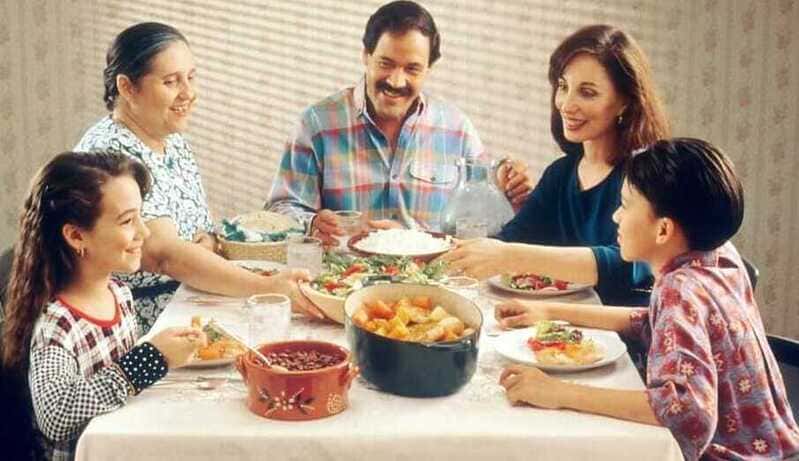
Why healthy eating matters for children
Proper nutrition is fundamental to a child’s growth, development, and overall well-being. A balanced diet supports:
- Physical growth and development
- Cognitive function and academic performance
- Immune system strength
- Emotional stability and mood regulation
- Long-term health and prevention of chronic diseases
Decide who is in charge of what
A lot of mealtime stress disappears once you split the job. You decide what food goes on the table and when meals and snacks happen. Your child decides whether to eat and how much. Dietitians call this the division of responsibility, and it works because it stops you from policing every bite while still keeping junk food off the menu.
In practice, that means you serve a balanced plate, and you don’t bargain, bribe, or force the last three spoonfuls. A child who is allowed to stop when full learns to read their own hunger. A child who is made to clean the plate learns to ignore it.
Lead by example
Children copy what they see far more than what they’re told. If you reach for fruit, water, and a real breakfast, that registers. If you eat standing at the counter, skip vegetables, or sip soda all day, that registers too. Eating the same meals as your child, at the same table, does more than any lecture about nutrients.
Use the table for low-key talk about food, too. Naming the food groups, or pointing out that the orange on their plate helps them fight off colds, plants ideas without making it a quiz.
Get kids involved in meal preparation
Cooking together can be an excellent way to teach children about nutrition. Try these interactive approaches:
- Let children help with age-appropriate kitchen tasks
- Teach them about different ingredients and their nutritional benefits
- Encourage them to choose fruits and vegetables at the grocery store
- Create simple recipes together that incorporate healthy ingredients
Build a healthy food mindset
Help your child notice when they’re actually hungry and when they’re full, then trust those signals. Skip food as a reward or a punishment. A cookie handed over for good behavior, or dessert withheld as a penalty, teaches a child to treat food as a prize rather than fuel.
Outright banning a food often makes a child want it more. It’s usually better to keep treats occasional, talk plainly about why some foods are everyday foods and others are now-and-then foods, and lean on whole foods over packaged ones.
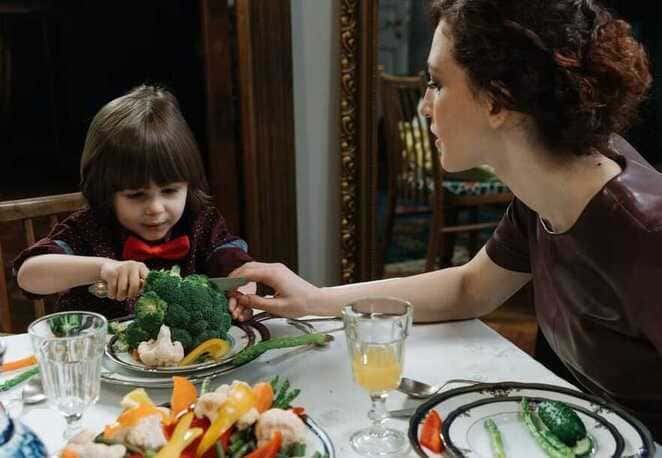 | 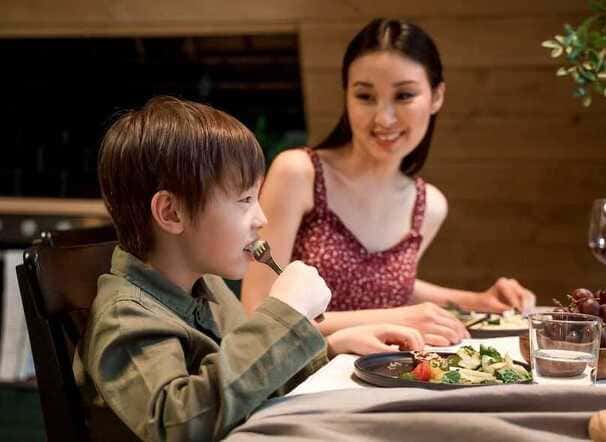 |
|---|
Handle picky eating without a fight
Picky eating is normal, especially between ages two and five, when many toddlers suddenly reject foods they ate happily a month ago. It usually passes. How you respond decides whether it passes faster or hardens into a habit.
A few things help more than the rest:
- Keep offering the food. A child often needs to see a new food 10 to 20 times before they’ll try it. One rejected bite is not a verdict. Keep putting the broccoli on the plate, with no pressure to eat it.
- Don’t pressure, and don’t cater. Forcing a few more bites backfires, and so does cooking a separate “kid meal” every night. Serve one family meal that includes at least one thing your child usually eats.
- Serve meals and snacks on a schedule. Aim for something every two to four hours. A child who has been grazing on crackers and juice all afternoon comes to dinner with no appetite for it.
- Pair new with familiar. A new vegetable next to a liked dip, or alongside a favorite food, gets tried more often than the same vegetable served alone.
- Make it look fun. Bright colors, simple shapes, and finger foods with a dip get a better reception, particularly from younger children.
What matters is the long game. Over a week, most picky eaters get what they need, even if a single dinner looks thin.
Teach the basics of nutrition
Introduce kids to the food groups and explain their benefits in simple terms. For example:
- Proteins help build strong muscles.
- Fruits and vegetables keep you energized and protect from sickness.
- Whole grains provide long-lasting energy.
How much fruit and vegetables does a child need?
Parents ask for numbers, so here is a rough guide. A child aged 2 to 3 needs about 1 serving of fruit and 2.5 servings of vegetables a day. From age 4 to 8 that rises to roughly 1.5 servings of fruit and 4.5 servings of vegetables. A common shorthand is five a day, which works out to around 1.5 cups of fruit and 2 cups of vegetables.
Don’t measure every plate. The point is the pattern: aim for fruit or vegetables at most meals and snacks, fresh, frozen, or canned, and let the weekly total even itself out.
Age-by-age: what to focus on
The same goal looks different at different ages:
- Toddlers (1 to 3): Let them feed themselves, get messy, and decide how much to eat. Small portions and patience matter more than table manners.
- Preschoolers (3 to 5): They love to imitate and to help. Bring them into the kitchen to wash, stir, and choose, and expect food preferences to swing week to week.
- School age (5 and up): Start explaining the “why.” Read labels together at the shop, talk about what different foods do, and give them a real say in planning a meal.
Create a healthy food environment
The environment at home plays a big part in shaping your child’s eating habits. Here’s how to set things up well:
Stock Up on Healthy Options: Fill your pantry and fridge with nutritious foods like whole grains, lean proteins, and fresh produce.
Limit Junk Food: Keep sugary snacks and sodas out of the house or reserve them for special occasions.
Make Healthy Foods Accessible: Keep a bowl of fruit on the counter or cut-up veggies in the fridge for easy snacking.
When healthy foods are the easiest choice, children are more likely to reach for them.
Ditch the “clean your plate” mentality
Many of us grew up under the clean-plate rule, but it teaches children to override their own fullness. Let them stop when they’ve had enough. They’ll overeat less and read their bodies better for it. If a plate keeps coming back full, serve smaller portions and offer seconds instead.
Teach portion control
Teach your child about appropriate portion sizes using visual aids. For example, a closed fist is about one serving of pasta, rice, or cereal, and a meat portion should be about the size of their palm. Fat intake can be limited to roughly the size of the top of their thumb. Encourage them to eat slowly, savor each bite, and listen to their body. This helps build a healthy relationship with food and prevents overeating.
Prioritize a nutrient-rich breakfast
Start your child’s day with a balanced breakfast that includes nutrient-dense ingredients like plain yogurt and fresh fruit. Avoid sugary cereals and pastries.
Read more in detail about Eat the Rainbow: Why Children Need Colorful Fruits & Veggies

Limiting processed foods and sugary drinks
Reducing processed food intake matters. While occasional treats are fine, moderation is the goal. Try these strategies:
- Read food labels carefully
- Choose whole food alternatives
- Limit sugary drink consumption
- Offer water as the primary beverage
- Create homemade snacks instead of buying packaged options
Make physical activity fun
Good eating habits work best alongside an active body. Build movement into family time with after-dinner walks, a swim, or a game in the park, so it feels like fun rather than exercise. Keep screen time in check too. The WHO recommends limiting sedentary screen time for young children, and active games are a better trade most of the time.
Read more in detail about The Science of Play: Fundamental to Your Child’s Development
Celebrate progress, not perfection
Finally, remember that teaching healthy eating is a process, not a destination. Celebrate your child’s progress, no matter how small. Did they try a new vegetable? That’s a win! Did they choose water over soda? Another win! By focusing on the positive, you’ll build their confidence and encourage them to keep making healthy choices.
When to talk to your pediatrician
Most picky eating and food refusal is just a phase. Some signs are worth a call, though. Talk to your pediatrician if your child is losing weight or not gaining it, gags or chokes on textures, eats only a handful of foods and is dropping more, seems low on energy, or if mealtimes are a daily source of real distress. A doctor or dietitian can rule out anything medical and check that your child is getting what they need to grow.
Conclusion
Teaching children to eat well is slow work, and it’s meant to be. You provide the food, the routine, and the example; your child does the rest at their own pace. There will be rejected dinners and weeks that feel like backsliding. Keep offering, keep the pressure off, and the habits build themselves over the years that count.